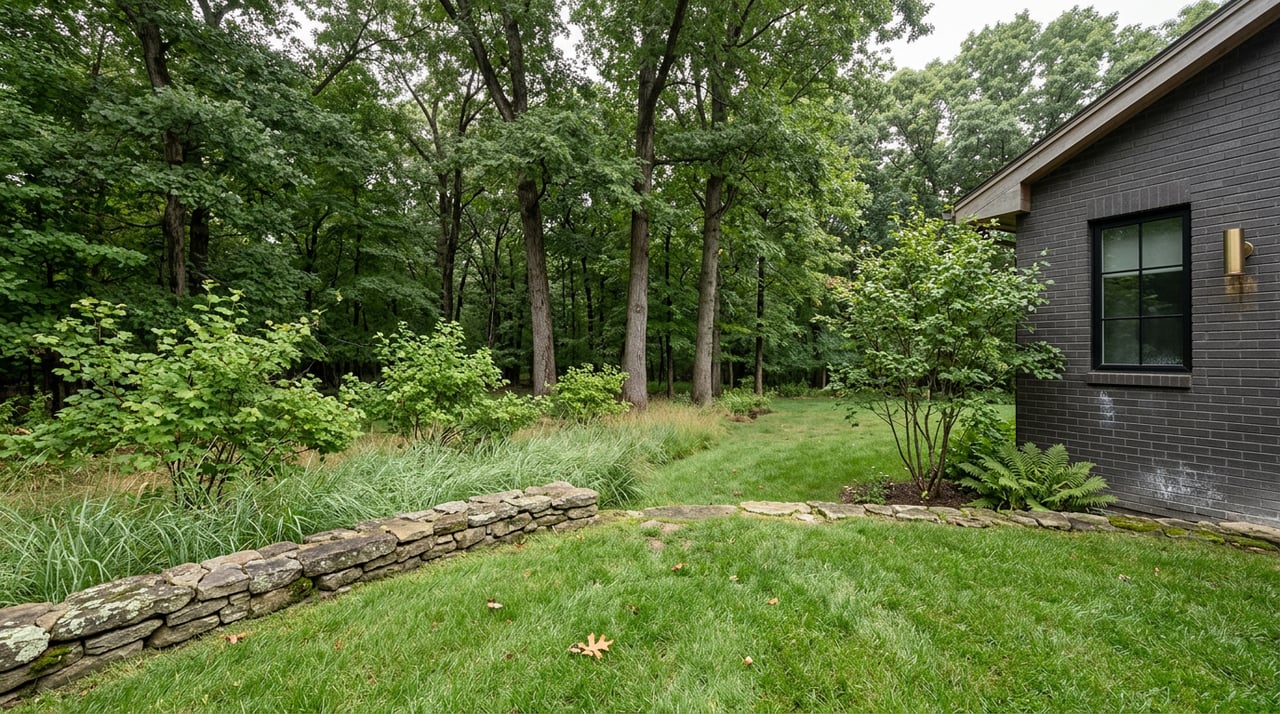
Two three-acre parcels can sit less than a mile apart in Oakland Township and mean two completely different things to the buyer who ends up owning them. One sits in a zoning district that allows a future accessory building, a pool house, maybe a horse barn. The other doesn't, not because anyone changed their mind, but because the ordinance drew a line somewhere else on the map. One has a septic system the county has already evaluated and cleared. The other hasn't been looked at in decades and won't be, until the sale itself forces the question. Same acreage. Same listing description. Different property, in every way that matters once you own it.
That gap rarely shows up in a search filter. It shows up in escrow.
What $1.275 Million Actually Buys Right Now
As of August 11, 2026, Oakland Township had 91 active listings carrying a median list price of $1,275,000 and an average of $425.39 per square foot, with homes spending an average of 89 days on market. That price tag buys a genuinely different product depending on where in the township you land. New construction currently starts in the mid-$800,000s and runs past $1 million, most of it built into the Rochester Community Schools boundary. At the higher end, a development like The Vistas of Oakland prices single-family homes from roughly $1,004,900 to $1,200,900 for 3,532 to 4,681 square feet, with an effective property tax rate around 0.71 percent, translating to a total millage in the 30 to 34 range once the state-equalized value resets after completion.
Those are real, current numbers. But none of them tell you whether the lot behind that price can be split later, whether it's served by a well the previous owner tested last year or never, or whether the septic field under the backyard was engineered for the soil it sits in or just installed and hoped for the best. That information lives in the zoning ordinance and the county health department file, not the listing sheet.
Acreage Is a Number. Zoning Is the Actual Product.
Oakland Township markets itself, accurately, on space. The township maintains more than 1,500 acres of parks across 16 sites, plus greenspace and direct access to the Paint Creek Trail, and its lowest-density zoning districts are explicitly written with rural intent: large lots, open space, minimal paving. That's the draw for the move-up buyer who wants distance between houses and a setting that feels less built out than Rochester Hills or Bloomfield.
But the zoning ordinance that protects that rural character is the same ordinance that decides what you can do with your acreage once you own it. A lot cannot be split, divided, or created unless it meets the minimum standard for its district, and that minimum varies by district, not by how much land happens to be for sale. Two properties can offer the same generous outdoor footprint and land in completely different places on what's actually allowed: one might support a future guest house or expanded garage, the other might not, depending on the district it sits in, whether it's served by sewer or septic, and site conditions like wetlands or slope.
This is the part that catches move-up buyers off guard. They shop by acreage because acreage is the number the portals surface. But the number that governs future value, future flexibility, and in some cases future resale, is buried in a zoning map most buyers never open before they write an offer.
The Water and Waste Questions the Township Doesn't Handle
Here's a detail that surprises a lot of buyers moving from a municipally serviced suburb: Oakland Township doesn't manage water service. Questions about water go to the Oakland County Water Commissioner. If the property runs on a private well, the county puts responsibility for testing squarely on the owner, recommending annual bacteria and nitrate sampling with arsenic testing every few years. Nobody mails you a reminder. It's on you.
Septic works the same way, and it carries more weight in a purchase. Michigan has no statewide sanitary code, so all 45 local health departments write their own rules for permits, inspections, and setbacks. Oakland County has taken a firmer stance than many: it requires point-of-sale evaluations when a property with a septic system changes hands, which means a system that's operated quietly for thirty years without anyone looking at it gets looked at now, right when you're trying to close.
A standard pump-and-inspect in the Wayne, Oakland, Washtenaw, and Macomb County market typically runs $300 to $475, with the statewide average landing near $400. That's the easy scenario. If the inspection finds a failing system, replacement is a different conversation entirely: conventional systems run $7,000 to $15,000, and mound or engineered systems required by tricky soil or a small lot can run $15,000 to $25,000 or more. Permit review in a high-volume county like Oakland can take three to four weeks on its own, before construction even starts. None of that is optional once a failure shows up on the point-of-sale report, and none of it is priced into the number you saw on the listing.
Category | On Municipal Sewer and Water | On Private Septic and Well in Oakland Township
--- | --- | --- Point-of-sale inspection | Not applicable | Required by Oakland County before transfer Typical inspection cost | N/A | $300 to $475 for a standard pump-and-inspect System replacement if it fails | N/A | $7,000 to $25,000+ depending on soil and design Water testing responsibility | Municipal utility | Owner, on an ongoing basis Permit review timeline | N/A | Often 3 to 4 weeks in Oakland County
The Bill in Lansing That Could Change This Math
There's a legislative thread worth watching if you're evaluating an older large-lot property here. Senate Bill 771 would establish statewide septic evaluation requirements tied to a system's age and its proximity to water, rather than triggering only at the point of sale. It advanced out of Senate committee in June 2026 and is still awaiting floor action, so it is not yet law. If it passes, it wouldn't replace Oakland County's point-of-sale rule, but it would mean far more systems across the state get evaluated on a schedule instead of by accident of timing. For a buyer weighing an older septic system today, that's a reason to get ahead of the question now rather than assume the current rules are the only ones you'll ever face.
What This Means If You're Comparing Oakland Township to a More Built-Out Suburb
If you're cross-shopping Oakland Township against a community like Rochester Hills or Bloomfield, where sewer and municipal water are standard, the comparison on paper usually comes down to price per square foot and lot size. That comparison is incomplete. The Oakland Township premium buys privacy, tree cover, and a genuinely different pace, but it also transfers a set of ongoing responsibilities, water testing, septic maintenance, permit timelines, that a buyer moving from a fully serviced suburb may not have priced into their monthly budget or their sense of what "large lot" costs to actually carry.
None of this makes Oakland Township a harder place to buy well. It makes it a place where the zoning district and the septic file matter as much as the acreage figure, and where a buyer who checks both before writing an offer is working with real information instead of a number that only tells half the story.
A Few Questions Worth Asking Before You Write an Offer
Does every septic system in Oakland Township require inspection before sale? Yes. Oakland County requires point-of-sale evaluation whenever a property with a septic system changes hands, regardless of the system's age or apparent condition.
Who typically pays for the septic inspection, buyer or seller? In most Michigan transactions where the county mandates the inspection, the seller covers the cost. Voluntary inspections beyond that requirement are usually a buyer expense, though it's always negotiable between the parties.
Can I find out a property's zoning district and minimum lot size before I tour it? Yes, and you should. The township's zoning ordinance and map are public record, and confirming a property's district before you fall in love with the acreage saves a difficult conversation later.
If you're weighing a large-lot property in Oakland Township against something in a more built-out Oakland County suburb, or you already own land here and want a clear picture of what today's zoning and infrastructure realities mean for your property's value, Kyle Matta can walk through the specifics with you. Request a complimentary home valuation and get a read on your property that accounts for what's actually underneath the acreage number.