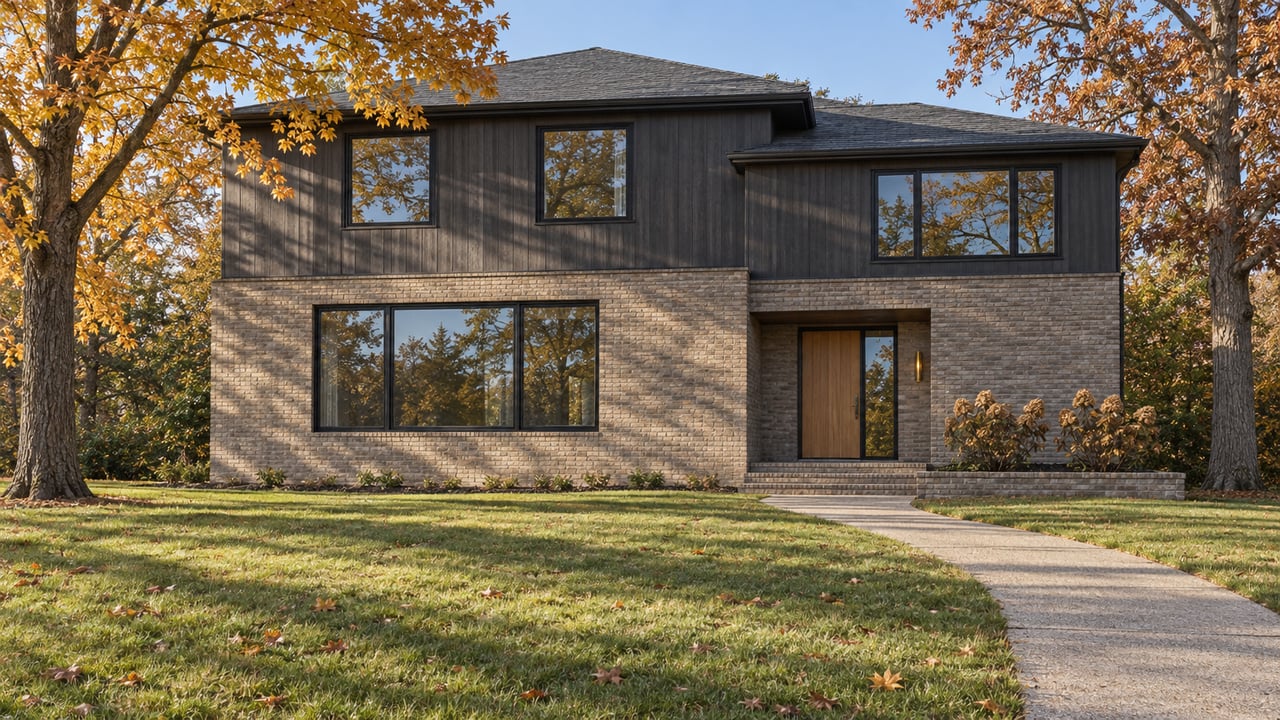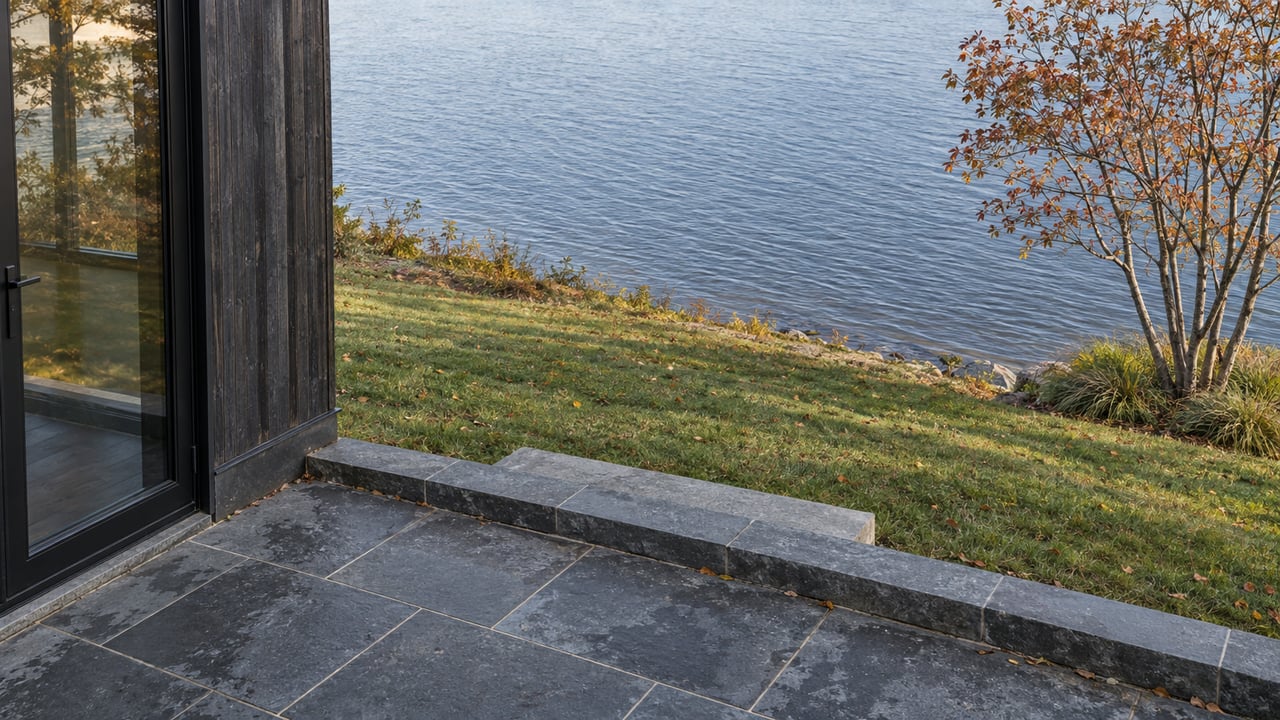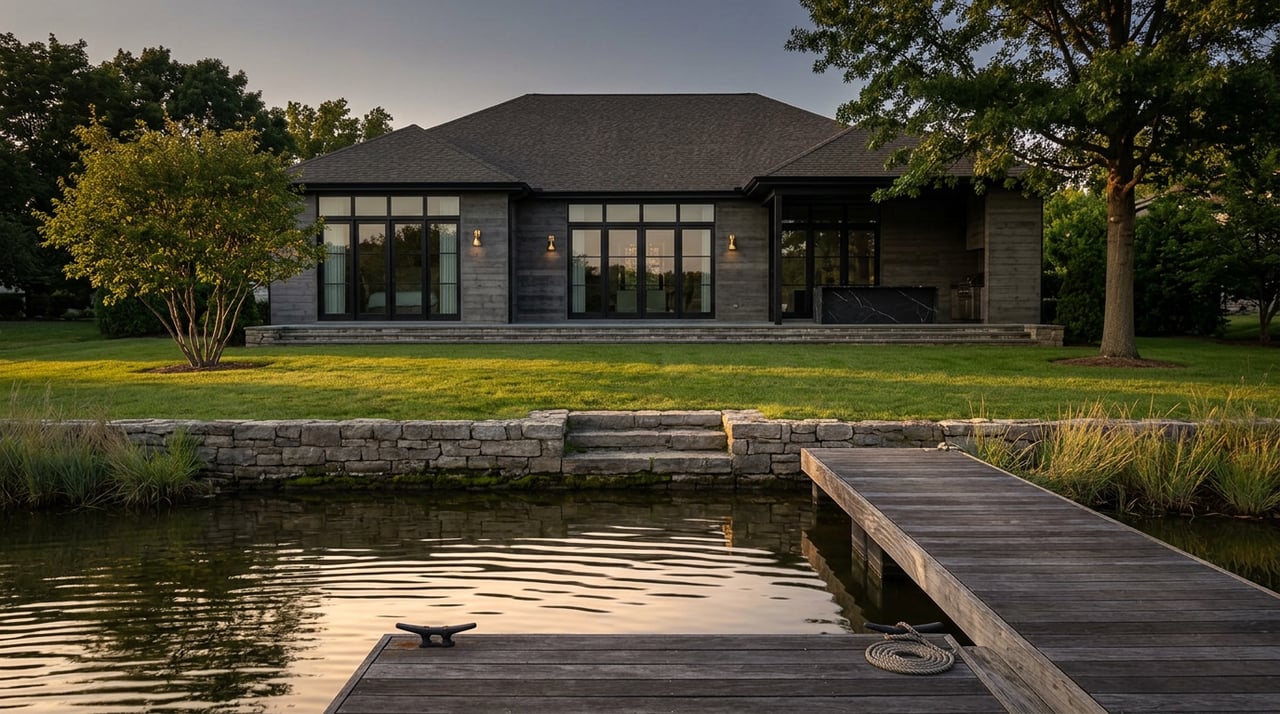
Two showings, same Saturday. The first home sits on Cass Lake with roughly the same frontage as the second home, which sits on Green Lake. On paper they look like variations of the same product: waterfront in West Bloomfield, comparable footage, both listed as "lakefront." The price tags are not close, and neither is the experience of owning either one. That gap is the whole story, and almost nobody explains it before the offer gets written.
West Bloomfield Township has 35 named lakes, and the market treats "lakefront" as if it were a single category with one price curve. It isn't. What a buyer is actually purchasing changes with the lake, the type of frontage, and a closing requirement that has nothing to do with square footage and everything to do with what's buried in the yard.
The Township Median Doesn't Describe Any Single Lake
Over the most recent trailing twelve-month reporting period, the median sale price across all of West Bloomfield Township sat at $451,500, up 8 percent from the year before. That number is a real, useful anchor for the township as a whole. It tells you almost nothing about what a specific waterfront property should cost, because it blends homes on municipal water and sewer with homes on private well and septic, homes with 300 feet of frontage on a 1,280-acre lake with homes on a nine-acre pond, and homes with full riparian rights with homes that only have deeded access to a beach two doors down.
The lakes themselves explain why a single median can't carry the weight buyers put on it.
| Lake | Size | Access | Character |
|---|---|---|---|
| Cass Lake | 1,280 acres | Public, all-sports | Oakland County's largest lake, reaches 123 feet at its deepest point, busy on weekends |
| Orchard Lake | 795 acres | Private, all-sports | Sits next to Orchard Lake Country Club, estate-scale lots |
| Pine Lake | 395 acres | Private, all-sports | Runs to 90 feet deep, homes commonly on private well and septic |
| Walnut Lake | 232 acres | Private, all-sports | 101 feet deep, known for an exclusive, quieter atmosphere |
| Upper Straits Lake | 323 acres | Private, all-sports | 96 feet deep, springfed |
| Green Lake | 166 acres | Private, electric motor only | Longstanding no-gas-engine culture among lakefront owners |
A buyer comparing a Cass Lake listing to a Green Lake listing isn't comparing two versions of the same asset. One is a large, public, boat-traffic lake. The other restricts propulsion to electric motors, which changes who buys there and why. Pricing either one off a township-wide median misses the variable that actually moves the number: which lake, and what kind of lake it is.
Why the Same Frontage Number Doesn't Buy the Same Water
Frontage footage on a listing sheet looks like a fixed, comparable unit. Under Michigan law, it isn't quite that simple, and the difference matters more on irregularly shaped lakes than round ones.
Riparian rights in Michigan extend from the shoreline out to the middle of the lake, but how that boundary is actually drawn depends on the lake's shape. On a round lake, property lines run to the center in pie-shaped wedges. On an irregular or oblong lake, the state uses a thread line, a centerline connecting the lake's endpoints, with each shore lot's boundary extended out at a right angle to that thread line. The goal, as Michigan real estate attorneys at Kuhn Rogers explain, is for each owner's riparian share to roughly match their upland share. That legal framework also governs who can install a dock and where, a right the Michigan Supreme Court confirmed townships can regulate in the 1992 case Hess v. West Bloomfield Township, which held that riparian rights are property rights that belong to the landowner but remain subject to local zoning control over docking.
For a buyer, the practical version of this is simple: 60 feet of frontage on a straight, evenly shaped shoreline is not automatically equivalent to 60 feet on a curving inlet or a narrow canal. Canal-front lots on Cass Lake, for instance, typically carry lower prices and lower taxes than direct frontage while still granting full lake access, because the buyer is purchasing a different slice of that pie-shaped or thread-line division. Before comparing two frontage numbers, it's worth asking an agent or a surveyor to explain where the actual water rights run, not just where the tape measure ran along the shore.
The Inspection That Doesn't Show Up on the Listing Photo
Here is the mechanism that catches the most buyers off guard, and it has nothing to do with the lake itself. West Bloomfield Township is one of a small number of Michigan jurisdictions with its own Time of Sale septic inspection requirement, meaning a property cannot legally transfer until its septic system has been evaluated. The township maintains an official program page for it, and licensed well and septic inspectors serving the area independently confirm West Bloomfield as a Time of Sale certified township, in the same category as Commerce Township and Washtenaw County.
This matters disproportionately for lake buyers because so much of the lakefront housing stock in West Bloomfield runs on private well and septic rather than municipal water and sewer. Pine Lake is a documented example, where roads are paved but homes remain on individual well and septic systems. A buyer touring a $1.5 million lake estate and a buyer touring a $450,000 inland colonial in the same township are not facing the same closing checklist. Michigan has no statewide septic inspection mandate, which is exactly why local ordinances like West Bloomfield's carry real weight. The Michigan Lakes and Streams Association tracks these Time of Sale ordinances precisely because coverage varies township by township and even county by county.
The inspection itself typically runs $250 to $700 in Michigan, with a standard pump-and-inspect in the Detroit metro area running $300 to $475 and full evaluations for real estate transactions more commonly landing between $450 and $600, according to current 2026 statewide septic cost data. The number that actually reshapes a deal comes if the system fails. Cracked baffles run $150 to $300 to fix. A saturated drain field can run $3,000 to $15,000. A compromised tank runs $3,000 to $7,000, all figures that never appear anywhere on a listing sheet and often surface for the first time during option period.
Michigan's Seller Disclosure Act adds one more layer buyers should read carefully rather than skim. The disclosure form covers well and pump, septic tank and drain field, city water, and city sewer, but it is not a warranty, and sellers who genuinely don't know a system's condition are allowed to mark that item "unknown." A clean-looking disclosure form on a well and septic property is not the same thing as a passed inspection.
What This Means If You're Comparing Two Lakefront Listings
Put the pieces together and the practical playbook looks like this:
- Identify which lake the property sits on, and whether it's public or private, all-sports or motor-restricted. That single fact does more to explain the price than square footage or year built.
- Ask whether the frontage is direct lakefront, canal-front, or deeded access only, since Michigan's riparian framework treats these differently even when the listing language sounds similar.
- Confirm the water and waste systems before falling in love with the dock. A property on municipal water and sewer carries none of the Time of Sale septic exposure that a well-and-septic lake home does.
- Budget the inspection and a possible repair into the offer rather than treating it as a formality. In a competitive lake market, waiving that contingency to compete on price is a real risk, not just a paperwork shortcut.
- Ask about dock and seawall permits directly. Buyers can reasonably expect to know whether existing structures are compliant and included in the sale before writing an offer.
None of this shows up in a portal search filtered to "waterfront." It shows up in the closing file, and it's exactly the kind of detail worth knowing before day one of a showing weekend, not during attorney review.
A Few Questions Worth Asking Before You Write an Offer
Does every West Bloomfield lake home require a Time of Sale septic inspection? Only properties on private septic systems are subject to it. Homes on municipal sewer aren't affected by this specific requirement, which is one more reason to confirm utility type early rather than assume based on the neighborhood.
Is Green Lake really restricted to electric motors? Yes, and that restriction has shaped who buys there for decades. It's a meaningfully different lake experience than an all-sports lake like Cass or Pine, and it tends to attract buyers prioritizing quiet over boat traffic.
Does being on the water always mean paying more than a comparable inland home? Usually, but not uniformly. A canal-front lot with full lake access can price below a comparable inland home on a larger parcel, while a wide-frontage estate on Orchard Lake or Pine Lake sits in an entirely different bracket. The lake and the access type matter more than the word "waterfront" itself.
Buying or selling lake property in West Bloomfield is rarely a straightforward comp exercise, and the details that actually move price and timeline live below the listing description. If you're weighing a specific lake, a specific frontage type, or a specific closing timeline, Kyle Matta can walk through what a property on your target lake is really worth and what its closing will actually require. Request a Complimentary Home Valuation to start with numbers built for your lake, not the township average.
This article is general information, not legal, tax or financial advice. Consult a qualified professional about your situation.