If you have ever wondered why one Rochester Hills home is priced far above another that looks similar on paper, you are asking the right question. In this market, citywide averages only tell part of the story because values can shift fast from one neighborhood to the next. When you understand what really drives pricing here, you can make better decisions whether you are buying, selling, or simply tracking your home's position in the market. Let’s dive in.
Why Rochester Hills Values Differ
Rochester Hills does not act like a one-price market. Zillow’s home value index puts the typical home at $465,253, up 3.4% year over year, while Redfin reported a March 2026 median sold price of $355,000. Those numbers are not directly comparable because one is a modeled value index and the other reflects closed sales, but together they show a market that remains active and relatively quick-moving.
That gap is exactly why neighborhood context matters so much. A home’s value here is often shaped less by the city average and more by lot size, subdivision age, school boundary, and amenity package. Two homes with similar square footage can land in very different price ranges depending on where they sit.
Lot Size Still Moves Prices
In older parts of Rochester Hills, land and privacy can carry a real premium. Christian Hills is one of the clearest examples, where recent public listings showed homes on roughly 0.71 to 0.93 acres with prices ranging from about $420,000 to around $914,000 depending on condition, size, and updates. That is a wide spread, and it shows how much buyers may value larger parcels in established neighborhoods.
This kind of pricing pattern is common when homes offer features that are hard to replicate in newer subdivisions. Larger lots, mature trees, and more separation between homes can push value higher even when the house itself is older. If you are comparing homes in these pockets, acreage and privacy often matter as much as interior finishes.
Older Neighborhoods Can Follow Their Own Track
Not every established neighborhood sits at the top of the pricing ladder. Brooklands Park is a lower-priced pocket, but recent data shows it has moved strongly from a smaller base. Redfin reported a median sale price of $350,000 in March 2026, up 45.8% year over year, with ranch sales and listings clustering around lots of about 8,276 square feet in the high-$200,000s to low-$300,000s.
The City of Rochester Hills describes Brooklands as one of the oldest parts of former Avon Township and an active redevelopment corridor. That helps explain why it may behave differently from newer subdivisions. For buyers, this can mean a more accessible entry point into Rochester Hills. For sellers, it shows why local momentum can matter more than broad city headlines.
School Boundaries Create Real Pricing Gaps
School assignment is not just background information in Rochester Hills. The city says Rochester and Avondale community schools both serve Rochester Hills, and Rochester Community Schools states that students are assigned by home address and the district is not schools of choice. It also notes that newer homes may not yet appear on the map, which makes address-level verification especially important.
That matters because school boundary can affect pricing from one street to the next. In southern Rochester Hills, Avondale-zoned pockets such as Dodge Auburn Park and nearby streets have shown a different price band than some Rochester Community Schools areas. Recent examples included a 0.35-acre colonial on Avalon Road that sold for $315,000 and a 1-acre ranch on Eastwood Drive that sold for $300,000.
The takeaway is simple. You should not assume that a Rochester Hills address automatically fits one pricing pattern. If you are buying, verify the assignment before you write an offer. If you are selling, your pricing strategy should reflect your specific location rather than the city name alone.
Amenities Can Outweigh Square Footage
Some subdivisions command stronger pricing because the neighborhood package goes beyond the house itself. Brookwood Golf Club is a strong example. Recent public listings included an updated colonial around $703,100 on about 0.27 acres, a ranch around $588,400 on about 0.31 acres, and a golf-course ranch that sold for $490,000 on about 0.56 acres.
What separates a neighborhood like Brookwood is the broader offering. Listing descriptions highlighted amenities such as a clubhouse, pool, golf, tennis, and Rochester Adams High School. In practical terms, buyers may pay more for a community with recognizable amenities even when lot sizes are not especially large.
Country Club Village tells a similar story, but with an important caution. Redfin showed a median sale price of $700,000 in November 2025, up 128.8% year over year, yet only one home sold during that period. That makes the percentage more directional than conclusive, which is a good reminder that small neighborhood sample sizes can distort short-term trend data.
Condos Offer a Different Price Point
Low-maintenance condo communities often sit at the other end of the value spectrum. Meadowfield and Woodgrove of Avon Hills have shown recent examples in the low-$200,000s to low-$300,000s. Listing details commonly emphasize HOA-covered exterior maintenance, snow removal, and shared amenities.
That lower price point does not automatically mean less market appeal. Recent listings in these communities often referenced Brooklands Elementary, Reuther Middle, and Rochester High. For buyers who want Rochester Hills access with less upkeep, condo communities can create a very different value equation than detached homes nearby.
Newer Construction Commands Its Own Premium
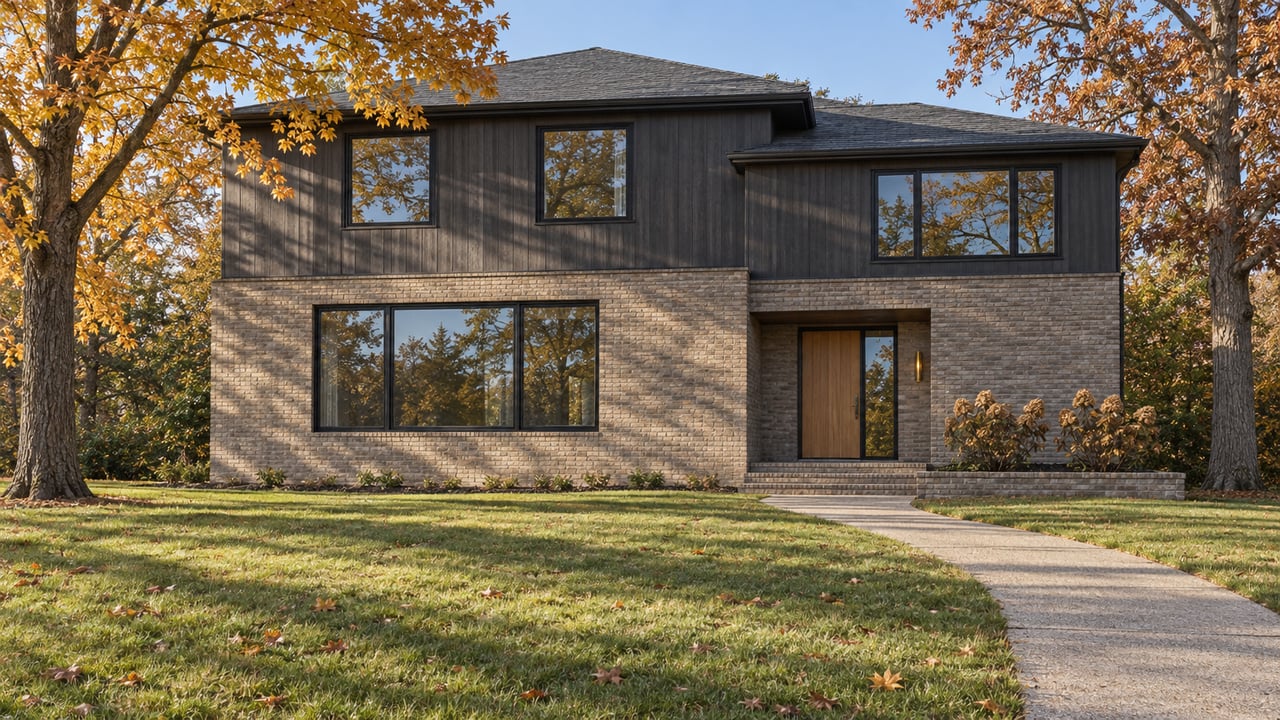
Newer construction in Rochester Hills often competes in an entirely different pricing lane. Clear Creek is a useful example, with public listings showing homes built from 2005 to 2011 on roughly 0.35 to 0.53-acre lots and prices around $1.0 million to $1.25 million. Listings also referenced proximity to Hart Middle School and Stoney Creek High School.
What drives that premium is not just lot size. Buyers are also paying for newer floor plans, updated finishes, larger layouts, and the overall product type. This is why a newer home on a moderate lot can sell far above an older home on more land.
For sellers, this matters when choosing comparable sales. A broad search across Rochester Hills may blur the differences between older large-lot neighborhoods and newer executive subdivisions. The strongest pricing strategy usually starts with homes that match your neighborhood style, age range, and buyer profile.
What Buyers Should Watch Closely
If you are shopping in Rochester Hills, comparing homes by price per square foot alone can lead you in the wrong direction. You will usually get a clearer picture by looking at four things together: lot size, subdivision age, school boundary, and amenity structure. That gives you a better sense of why one home may feel like a bargain while another carries a premium.
It also helps to stay cautious with eye-catching trend numbers. In neighborhoods with only one or two recent sales, monthly or yearly changes can look dramatic without representing a stable long-term pattern. Looking at the actual homes, their lots, and their locations often tells you more than a percentage headline.
What Sellers Should Know Before Pricing
If you are preparing to sell, the biggest mistake is treating Rochester Hills like a single average market. Buyers here often compare homes at the subdivision level, not just by city. A home in Christian Hills, Brooklands Park, Brookwood Golf Club, Country Club Village, or Clear Creek may compete on very different terms.
That is why pricing should be precise. The most useful comparable sales are usually the ones that reflect your specific neighborhood, school assignment, lot type, and housing style. A thoughtful pricing strategy can help you avoid leaving money on the table or missing early momentum with an asking price that does not fit your segment.
The Bottom Line on Rochester Hills Neighborhood Values
The clearest way to understand Rochester Hills home values is to stop thinking in one citywide number. Older large-lot neighborhoods often trade on land and privacy. Amenity-rich subdivisions can carry premiums that exceed what square footage alone would suggest. Newer construction often lives in its own pricing tier, and school boundaries can create meaningful value changes even between nearby streets.
When you break the market down this way, pricing starts to make more sense. If you want a sharper read on how your neighborhood compares, or where a target property fits within Rochester Hills, working from hyperlocal data is the smartest next step. For tailored neighborhood insight and a pricing strategy built around your specific home or search, connect with Kyle Matta.
FAQs
How do Rochester Hills home values vary by neighborhood?
- Home values in Rochester Hills often vary based on lot size, subdivision age, school boundary, and neighborhood amenities rather than citywide averages alone.
Which Rochester Hills neighborhoods tend to have larger lots?
- Established neighborhoods such as Christian Hills have recently shown larger lots, often around 0.71 to 0.93 acres, with pricing that can vary widely based on updates and home size.
Do school boundaries affect Rochester Hills home prices?
- Yes. Rochester Hills is served by both Rochester and Avondale community schools, and address-level school assignment can be a meaningful pricing factor.
Are newer Rochester Hills homes priced differently than older homes?
- Yes. Newer-construction neighborhoods such as Clear Creek have recently shown much higher price points because buyers may pay a premium for newer layouts, finishes, and overall home style.
Are condo communities in Rochester Hills more affordable?
- In many cases, yes. Communities such as Meadowfield and Woodgrove of Avon Hills have recently shown lower price points than detached homes, often with HOA-covered exterior maintenance and snow removal.
What should sellers use to price a home in Rochester Hills?
- Sellers usually benefit most from subdivision-level comparable sales that match the home’s neighborhood, lot type, age, and school boundary instead of relying only on citywide averages.