Thinking about buying land in Oakland Township? A parcel that looks perfect on paper can become much more complicated once you dig into zoning, wetlands, septic feasibility, and access. If you want to avoid expensive surprises, you need to understand what makes land here different, what to verify before you buy, and how to estimate the real cost of building. Let’s dive in.
Why Oakland Township Land Needs More Research
Oakland Township describes itself as a wooded residential bedroom community, and that setting is a big part of its appeal. It is also a big reason land buyers need to do more homework here than they might in a typical subdivision. According to the township’s history and community overview, the area includes rolling hills, steep slopes, wetlands, and multiple watersheds.
Those natural features can affect everything from where you can place a home to how much site work may cost. The township’s zoning ordinance also emphasizes preserving open space and protecting environmentally sensitive land. In practical terms, that means a parcel being for sale does not automatically mean it is easy to build on.
Start With Zoning
Before you think about home plans, site clearing, or even value, confirm the zoning district. The township’s Planning and Zoning Department notes that the official zoning map kept at township hall is the final authority, which is why third-party websites should not be your final source.
Zoning affects whether your intended use is even allowed, but it also shapes lot size, frontage, and development options. If you are buying land for a custom home, a future split, or a more complex project, this should be your first checkpoint.
Lot Size and Sewer Matter
In Oakland Township, residential districts range from very low density to medium-high density, and sewer availability can make a major difference in what is possible. Under the current ordinance, examples include:
- VLRD: 100,000 square feet without sewer, 75,000 with sewer
- LRD: 60,000 square feet without sewer, 45,000 with sewer
- LMRD: 40,000 square feet without sewer, 30,000 with sewer
- MRD: 26,000 square feet without sewer, 19,500 with sewer
- MHRD: 22,000 square feet without sewer, 16,500 with sewer
That is a meaningful spread. A parcel that seems large enough at first glance may not work the same way depending on whether public sewer is available.
Buildable Area Counts Too
Zoning is not just about total acreage. The township ordinance states that proposed lots under test plan review must have at least 5,000 square feet of contiguous buildable area that is not wetland, floodplain, or underwater.
That detail matters because two parcels with the same acreage can have very different real-world usability. One may offer a clean build site, while another may lose a large portion of usable area to environmental constraints.
Check Wetlands and Natural Features Early
This is one of the biggest issues for Oakland Township land buyers. The zoning ordinance requires a 25-foot setback from the edge of a wetland and a 25-foot setback from the ordinary high-water mark of a watercourse.
The township generally prohibits dumping soil, placing structures, or doing earthwork inside those setback areas unless it determines the activity is in the public interest. That is why wetlands and drainage should be reviewed before you assume a lot is ready for your plans.
For an initial screening, the state’s wetlands tools can help, but they are not the final answer. As Oakland County notes through its permitting resources, EGLE’s wetlands map viewer is only an approximate screening tool, and regulated wetland activity may require a permit.
When More Review May Be Needed
For larger or more sensitive sites, the township can require an environmental assessment. Site-plan materials may also need to address:
- Existing site conditions
- Prior land use
- Natural features
- Drainage
- Utilities
- Soil types
- Legal description and boundary survey
That may sound technical, but it points to a simple truth: in Oakland Township, due diligence is not optional. It is part of buying land responsibly.
Confirm Septic and Well Feasibility
If a parcel is not served by public sewer, you need to verify septic feasibility before treating the lot as build-ready. The Oakland County Health Division septic page explains that a new residential onsite sewage disposal system permit is required for vacant land.
The process involves submitting an application and arranging a soil evaluation, with test holes dug by backhoe while a sanitarian is present. If soils, water table, and available space are acceptable, the permit can be issued. If conditions do not work, the application may be held or denied. The current listed fee for a new residential septic permit on vacant land is $325.
If the property will rely on a private well, the county well and water services page says well permits are also handled by the county. The current listed fee for a new private or Type III well permit on vacant land is $260.
The county also recommends annual testing for bacteria and nitrates and notes that private well owners are responsible for testing their own water. If you are buying raw land, this is an important long-term ownership cost to understand.
Verify Water and Sewer Service
Utility assumptions can get buyers into trouble fast. Oakland Township’s water information page makes clear that township water service questions are directed to the Oakland County Water Resources Commissioner, which also processes water and sewer connection and disconnection applications.
Just as important, the county notes that local communities may require additional permits for water or sewer construction. So before you price out a build, ask a direct question: is the parcel on public water, public sewer, both, or neither?
That answer can change site design, permitting, and total project cost. It can also change the type and size of home the site can realistically support.
Do Not Overlook Driveway Access
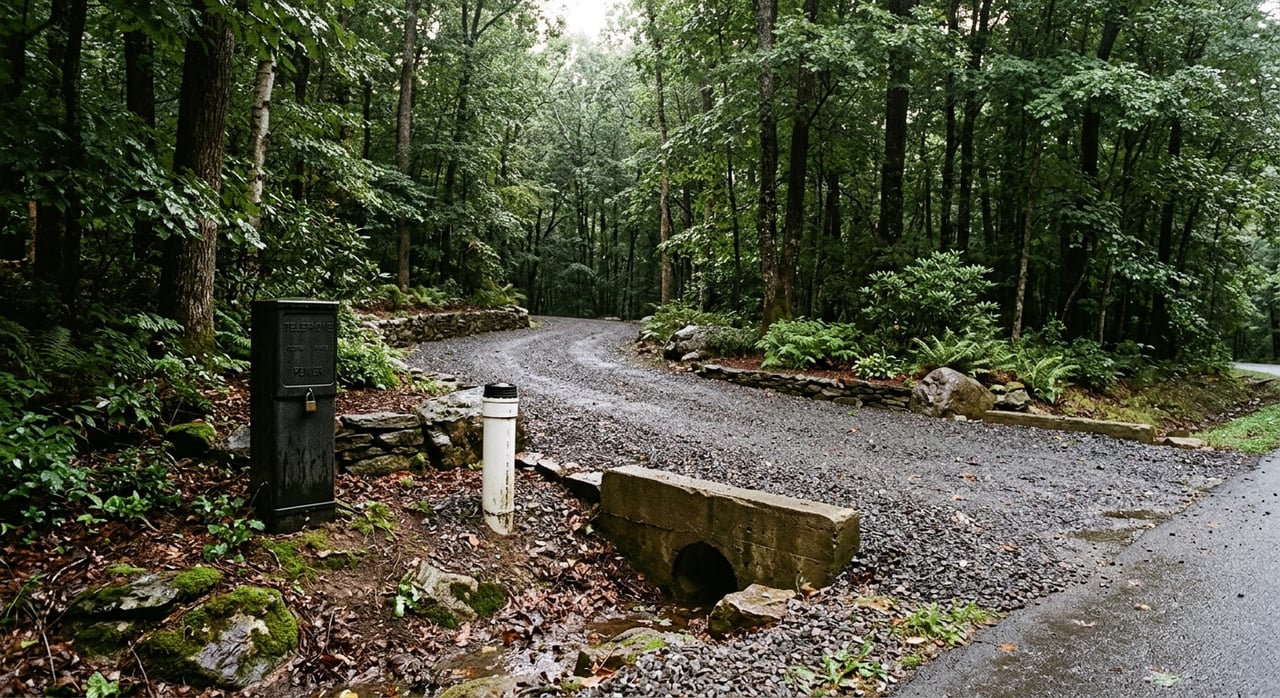
A parcel may have road frontage and still require more investigation. If the lot fronts a county road, the Road Commission for Oakland County driveway permit process should be reviewed early.
The right-of-way permit process can cover driveway access, utility work, storm sewer work, sanitary sewer work, and watermain work. If a driveway approach or culvert is difficult or costly, that can materially affect the lot’s true usability.
For buyers, the takeaway is simple: do not assume access is solved just because a parcel touches a road.
Plan for Site Prep and Earthwork
Even after zoning and utilities check out, site prep can add a substantial layer of cost. Soil erosion permits may be required through Oakland County’s permitting system, and separate drain-use permits are required for work in county-drain easements, according to the county’s water resources permitting information.
This matters most on sloped, wooded, or environmentally sensitive sites. Clearing, grading, stormwater management, and erosion control can become a meaningful part of your total budget before the foundation is ever poured.
What Drives Land Value in Oakland Township
In this market, land value is about more than acreage. The township is served by Rochester Community Schools, Lake Orion Community Schools, and Romeo Community Schools, and district boundaries are one of several details buyers often want to confirm early through the township’s local information.
Beyond that, marketability often comes down to practical factors such as:
- Paved versus private road frontage
- Public water or sewer availability
- Septic and well feasibility
- Wetlands and natural-feature constraints
- Amount of usable buildable area
- Overall ease of site preparation
A smaller parcel with cleaner access and better utility support may compete very differently from a larger parcel that needs extensive review and infrastructure work. In Oakland Township, buildability can matter just as much as acreage.
A Smart Order of Operations
If you are serious about buying land in Oakland Township, it helps to follow a clear sequence. This can reduce risk, improve budgeting, and help you avoid falling in love with a parcel that does not fit your goals.
Land Due Diligence Checklist
- Confirm the official zoning district with the township.
- Review minimum lot size, frontage, and use standards.
- Check for wetlands, watercourses, floodplain, and setback impacts.
- Verify whether public water and sewer are available.
- If needed, investigate septic permit feasibility and well permit requirements.
- Confirm driveway access and permit requirements for the road frontage.
- Estimate site-prep costs, including grading, clearing, and erosion control.
That order matters. The purchase price is only one piece of the equation, and early due diligence gives you a much clearer picture of the total investment.
Why Local Guidance Matters
Buying land in Oakland Township can be rewarding, but it requires a more strategic approach than many buyers expect. The right parcel is not just the one with the best photos or the biggest acreage count. It is the one that aligns with your plans, your timeline, and your total budget once zoning, utilities, access, and site prep are all factored in.
If you are weighing land opportunities in Oakland Township or nearby Oakland County communities, working with a local broker who understands how these pieces fit together can save you time and help you evaluate options more confidently. To talk through available parcels or your buying strategy, connect with Kyle Matta.
FAQs
What should you check before buying land in Oakland Township?
- Start with official zoning, then review wetlands and setbacks, sewer or septic options, well requirements, driveway access, and likely site-prep costs.
How does zoning affect land purchases in Oakland Township?
- Zoning determines allowed use, lot size, frontage, and in some cases whether sewer availability changes the minimum parcel requirements.
Do Oakland Township land buyers need to test for septic feasibility?
- Yes, if the parcel is not on public sewer, the Oakland County Health Division handles the septic permit and soil evaluation process for vacant land.
Can wetlands affect where you build on land in Oakland Township?
- Yes, the township ordinance requires setbacks from wetlands and watercourses, which can reduce the amount of usable buildable area on a parcel.
Who handles water, sewer, well, and driveway questions for Oakland Township land?
- Water and sewer questions are routed through the Oakland County Water Resources Commissioner, well and septic permits are handled by Oakland County Health Division, and county-road driveway permits go through the Road Commission for Oakland County.